Andrew talks about his time with the mobile library service, some of the changes he experienced and some of his customers.
Joining the mobile library service
I’d been working for the American Air Force for about 17 years, and when they closed the Airbase down, we were all made redundant. So, I was looking for a new job and I came across one advertised in the Eastern Daily Press, which was for a mobile library driver assistant. This was in 2002.
The salary was between £12,618 and £13,500. By then I was getting on a bit in age, so I thought if I got it, it’d probably do me for the rest of my life, so I applied. I was asked to go for an interview at Dersingham Library. When I arrived, the Manager of the Library and the Area Manager were there to interview me.
The interview lasted about an hour. I had a very friendly chat, and they questioned me on various things. After the interview I came home, and my wife put the kettle on and started to ask me about it. I was about to tell her when the phone rang. I picked up the phone it was the lady from library, she was offering me the job, so I readily accepted and that’s how I became a Mobile Library driver assistant.
Initially, I was sent to Norwich for training to be a library assistant at the Millennium Library in Norwich and it was basically about how to operate the computerised library system. I was there with a lot of the other new staff who were going to be library assistants in the main branch libraries. The previous mobile library operator, who I was taking over from, had become the manager of Hunstanton Library. He accompanied me on the mobile library giving me on the job training around the villages I would be covering. So that’s how I became a mobile library driver assistant.
Technology and the mobile library
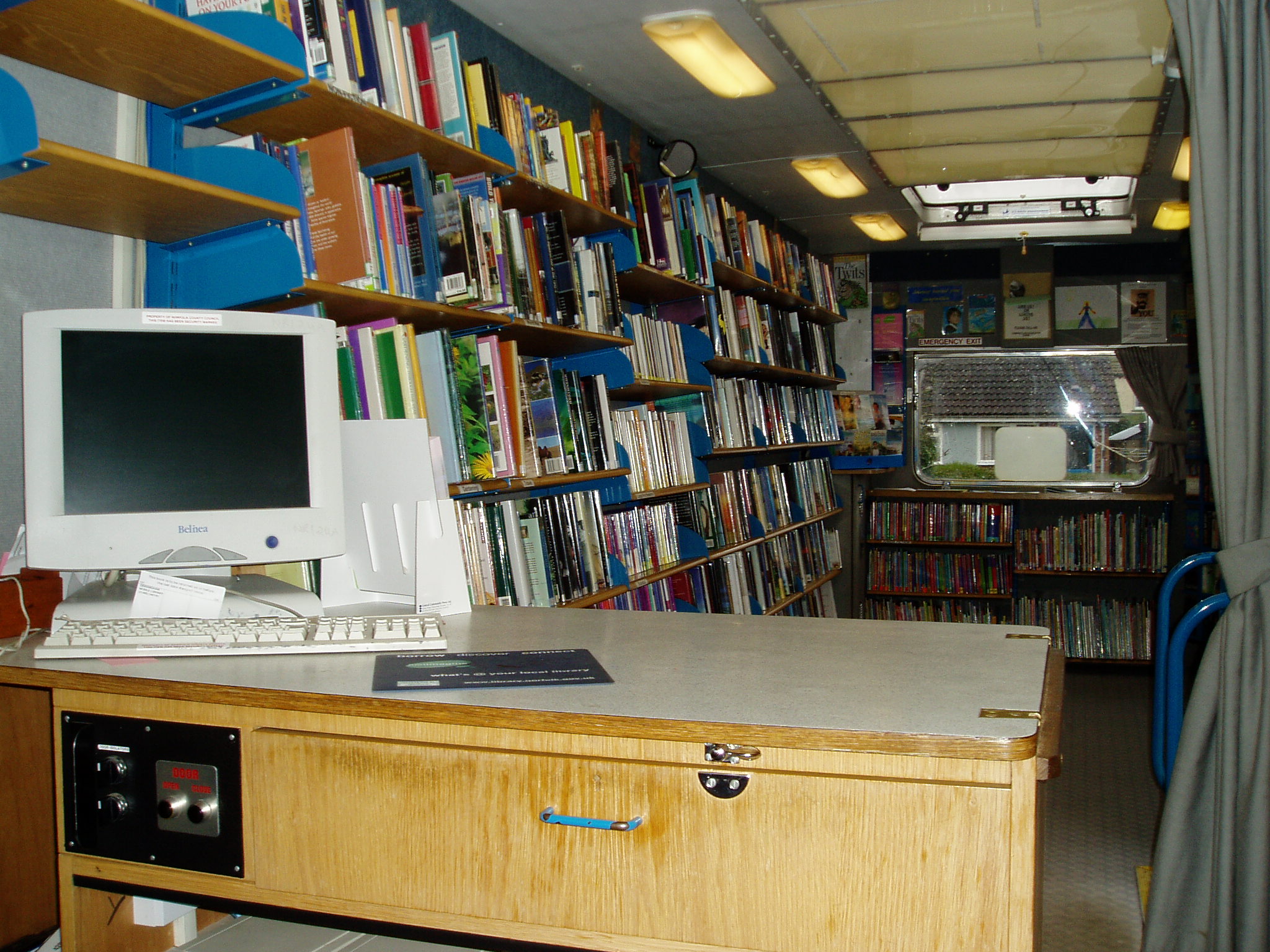
The area I covered was quite large, all around Dersingham. To start with, Dersingham Mobile Library was the only computerised mobile library in Norfolk and was connected to the main library system by a mobile phone signal. It was a very modern and efficient system. We could do everything on that mobile library that could be done with the online system on the main branch library computers. Unfortunately, a new mobile library manager arrived and one of the first things he did to save money was to take the computer system from the mobile library I was operating. It was very disappointing and created more work.
It was a very efficient system, and the customers liked it. They could use their library cards, get books from me and take them back to any of the branch libraries and vice-versa. But now I had to use the old card system, where all you had to do was count the number of books the customers were taking, jot it down on a card and off the customer went. Also I was no longer part of the book rotation system, which had been very handy. Books were rotated on a regular basis between the mobile library and the main libraries and controlled by the computer system That stopped when the computerised system was taken away, which in my opinion was a real backward step. The manager who came to take control of the mobile library had never been in the library system before, and I don’t think he really knew how it worked. Up to that point, people could come to me from the main libraries with their library card and use that same card. I could tell what books they had out and if any were overdue. If they wanted to order a book, I could search the catalogue and get it on order for them immediately. Now, because the computer had been removed, I had to order those books on the library computers when I got back there at the end of the day.

However, after a few years the manager investigated it and eventually, we were given a laptop with an offline system on it, a fall-back system. This was for all mobile libraries in Norfolk, not just the Dersingham one. Now, all mobile library customers were given library cards, the same as the main libraries. When they came to the mobile library, they would choose their books, and we would scan the card and the books. That’s all the system was able to do. When we got back to the main libraries, we had to put the laptop on a docking station and then upload that day’s work to the main computer system at Norwich. We still had to order books for the customers back at the library and check any other details.
The fallback system went on for two or three years, and then the manager informed us we they were going to go back to the system I had used originally. The fall-back system we had been using was pretty useless, and nowhere near as good as the system I originally had. Anyway, all mobile libraries were upgraded to a live system, which saved a lot of work, as we had access to the main library catalogue again. People could get books from us and take them back to the main library. Likewise, if they went to Norwich, they could go in the main library, choose books there and bring them back to us. We could now record where everything was going, and it was a modern, efficient system – but it took a few years to get back to it!
What a relief!
Things also changed a bit with the mobile library itself. When the manager ordered new vehicles to replace the old ones, they now came with toilets, which was a relief, if you excuse the pun! No longer did we have to stop outside a pub and run into the toilet or ask a customer whether we could use their facilities. It was a very handy innovation. The new vehicles also came with microwave ovens and a portable cool box. So, it was a very good upgrade for the mobile library staff’s health and wellbeing..
Using the lift
On all the mobile libraries, we had this hydraulic platform system to help customers with mobility issues get onto the mobile library. To operate it we had to jump off the library, get the platform down. The steps pulled out and turned into a platform. The customer could stand on that platform on the ground, and then by using the hydraulics we could lift them up to the height of the library, they could then walk or be wheeled on if in a wheelchair. Once on we would then turn the platform back into steps and serve the customers. We reversed the process to get them back down again. The platform was used quite frequently and was a very useful piece of equipment.
Work patterns
Most of the routes I used to go on were two-weekly visits, apart from every other Friday which was a four-weekly route. That never changed all the time I was doing the job. Heacham, which is a large village, had a visit every week, but it was a different route around the village every week so we never stopped at the same place twice in the village over the two-week period. Now I think there is only one visit to the village every month.
An unusual customer
When I first started, I had a library assistant accompanying me for about half of the routes.
One of the assistants, Linda, would accompany me every other Tuesday on the Heacham route. Linda was very amusing, and she had no airs and graces. What you saw was what you got, and what you got was usually a big warm smile with bundles of humour. And that humour was unique in that she could be very rude to customers in such a way that we would all roll about laughing. None of the customers were ever offended.
Linda liked chatting with people, she would deliver books to housebound customers, we would choose the books for the customers and Linda would deliver them and stay and have a quick chat. Linda’s routine for one customer, Mrs P was to deliver the books to her, then sit beside her bed chatting while at the same time stroking Mrs P’s very large white cat named Snowy, which was always on a chair besides Mrs P’s bed, on this particular visit which Linda hadn’t been on for about 6 weeks because of illness, she fell into the same routine chatting with Mrs P while stroking Snowy, after about five minutes, Linda said to Mrs P, ‘Is Snowy okay? He doesn’t seem to be moving.’ Mrs P answered calmly, ‘No, dear, he wouldn’t. Snowy died. I couldn’t bear to be without him, so I had him stuffed.’ Linda came back to the mobile library and was giggling profusely. Then she said to me, ‘I’ve been stroking a dead cat’ and told me the story. For the rest of that day, we just kept thinking about it and laughing.
Sadly, Linda died in her early fifties, having got cancer. Many mobile library customers came to her funeral. She was very well thought of. She was sadly missed.
Working hours
The time of the first stop of the day was usually around nine o’clock and the last stop was roughly around 4.30 in the afternoon. We had an hour’s stop for lunch. I used to count the customers at each stop, so we could see at the end of the day what the numbers were. I really used to do it for the relief drivers, so they had a rough idea of how many people to expect at any specific stops.
At one old people’s home we used to get about 12 people, and there were some other busy stops, but sometimes we’d get just one or two people. They were mostly regular customers, who would know what time to come, as some of the stops were for only 10 minutes. You might have three or four people come in and all choose their books in those 10 minutes, then you’d have to be off to get to the next stop. If you didn’t get to the stop on time, the customers waiting would soon let you know! To keep them happy, we tried to get to most of the stops on time.
Age of the customers
The customers were mostly elderly and retired people. Younger people would come on as well and bring their children if they had come out of school. I used to stop outside the gates of a school in Grimston (which is now closed), hoping the parents would bring the children on, I would hear the children say they wanted to come on the mobile library, but the parents would say, ‘Come on, we haven’t got time for that’ we need to get home. I did have regular customers there but, funnily enough, hardly any children. I also stopped at the middle school in Grimston and did get quite a few customers. Sometimes, around 20 children would get on with their parents, so that was one school stop that did work out encouraging children to read.
Cancelling routes
The only time we couldn’t do the routes was usually due to bad weather in the wintertime, if there was snow on the roads and it was icy. It didn’t happen often.
I also had to cancel one of my routes in 2003 because being the only mobile library with a computer, I was asked to take it to the Royal Norfolk Show for two days, so we could sign people up. It was good being there. It was very popular. I wouldn’t say we signed many people up, but we had many visitors.
Types of books
There wasn’t really much change in the type of books people chose during the time I was on the mobile libraries. It was mostly fiction that people went for, although I used to get some regular customers that liked non-fiction. I had one gentleman who used to be a university lecturer and he always gave me a hard time about the type of books we carried on the library. He would give me titles that he said I should be carrying, I used to order books in for him. If I had filled the library with all the titles he wanted, most of the other customers would have stopped coming! You would get ladies coming on who liked their romances, and others would be avid crime readers, but he used to tell me they were a waste of space.
The Dewey system
Every other Friday was a maintenance day, where you used to check out the vehicle, catch up on admin and change the books. I used to try and change about 100 books, rotating them with the library. Alison, one of the librarians, sometimes arranged for me to go into other libraries, not just the Dersingham one. It all had to be done through the computer system, so it wasn’t straightforward. It took time, but at least it gave me a different selection of books in the mobile library to keep the customers happy.
We used the Dewey Decimal Classification System for non-fiction books on the mobile library.
Fiction books were in alphabetical order by author.
There were about 2,500 books on a mobile library including children’s books, non-fiction and large print. We used to carry a selection of large print as well as spoken word, tapes and CDs, and then you used to get complete stories on a little electronic e-reader which you were required to use earphones to listen.
A royal stop
One of my other stops in the Dersingham area was inside the Sandringham Estate grounds. We used to stop at York Cottage, and I have a photo of it in 1893 when King George V and Queen Mary moved in after their wedding.
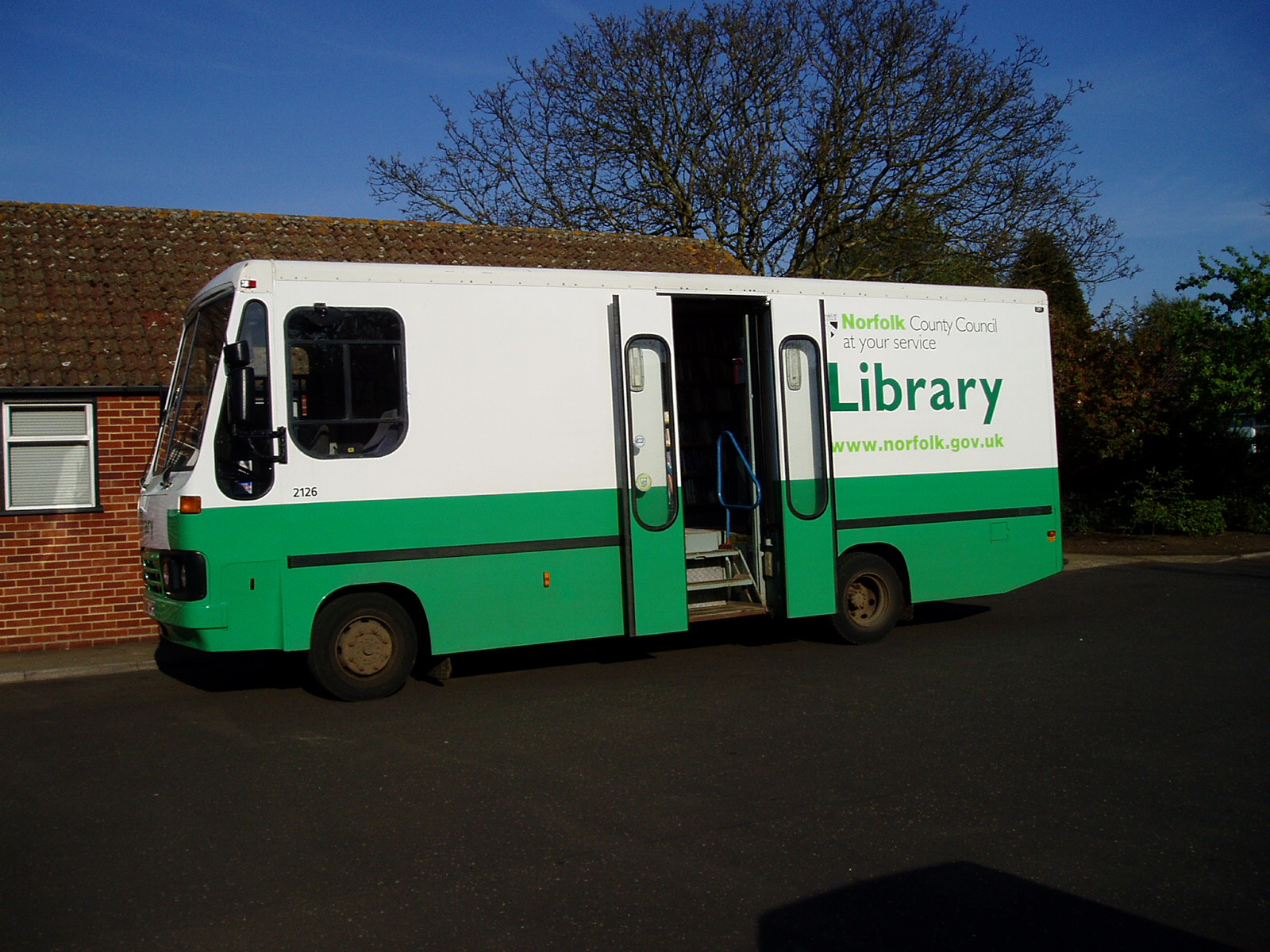
The included photo shows me parked there in 2013, outside what is now the estate office. The customers there would be the office workers, and people who lived in the many houses within the estate grounds.
I went there one Friday, and there was not one car in the car park. I parked right in the middle of it, and one of my first customers, who was there waiting for me as she always was, came on board and said, ‘Why aren’t there any cars?’ I said, ‘I don’t know.’ Then a man came running out of the office door, nearly tripping over, shouting ‘Get off, get off the car park she’ll be here in a minute. I pulled off the car park and parked on the edge of it. As soon as I did, a three-car convoy came and stopped right where I had been parking. It was the Queen!
The land agent, who I had got to know because he’d been on the mobile library before, was there greeting her. Then they turned and looked towards me, and the Queen was pointing towards the mobile library. I thought, ‘Hello, am I going to get a visit?’ But no, they turned and walked into the Estate Office. I always wondered what she was saying about the mobile library, could it have been, ‘What is he doing in my garden?’ I will never know. But my customer, Mrs B, was overjoyed because she was looking out of the back window viewing the arrival of the Queen.
When I first started going to York Cottage, it was through the side gate at Sandringham. I used to drive and follow the path round and park outside the office. In the summertime it’s beautiful, lovely scenery, a memorable stop.
If the royal family were there a policeman would be inside the gate and would stop you, check you out, and then wave you on.
After security at Sandringham was tightened, that side gate we used to enter the grounds was shut, we were told we now had to go round to a gate at the back of the estate. That gate had been fitted with security cameras, all pointing down at the gate so security could see and check everyone before they let you in. There was a control board. You had to get out of the mobile library, push a button, if the Royal Family were in, you would be answered by a policeman, who would question you about what you were doing. If the Royal Family were not in residence, one of the office staff would open the gates for you from wherever they were. If they were satisfied the gates automatically opened and we would go through and park outside York Cottage. Customers would come on, then we would go out a different way, through the big gates that would automatically open and let you out. That’s how it changed at that particular stop, but very nice people used to come on there.
Trinity Hospital, Castle Rising
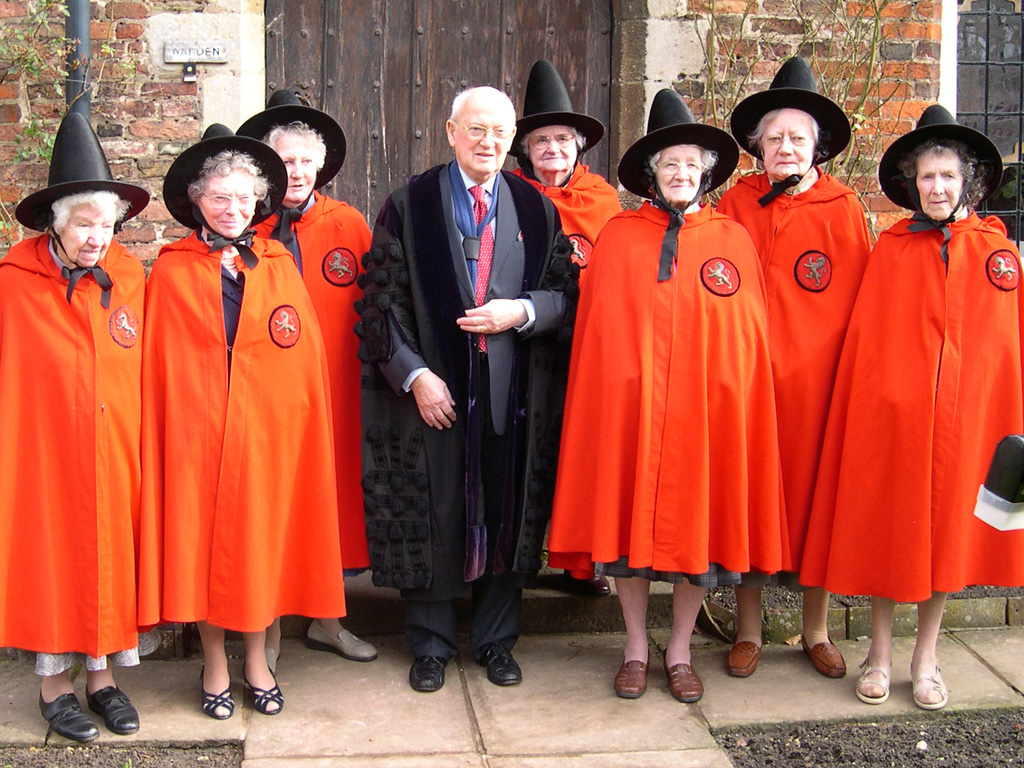
Another memorable stop was Trinity Hospital at Castle Rising, which has been an old people’s home since the 1600s. When it first opened in 1600 it was for 12 women, and the stipulation was that, ‘They must be of honest life and conversation, religious, grave and discreet, able to read, if such a one be had, a single woman, her place to be void on marriage, to be of 56 years at least, no common beggar, harlot, scold, drunkard, haunter of taverns inns and alehouses. These are the original qualifications for admittance for Trinity Hospital, Castle Rising, the beautifully cloistered early 17th century brick building and almshouse charity founded by Henry Howard, Earl of Northampton, who died in1614.’ It’s an interesting old building to visit, a lovely old place where the residents live in individual accommodation around a courtyard.
My customers there were all lovely people. One was the ‘senior lady’, she lived in the largest room in the building. I would take the ’senior lady’s books to her, because she couldn’t come to the mobile library. I used to knock on this big medieval door, she would come to the door, it would squeak and squeal as she opened it and I remember clouds of smoke would come wafting out as she greeted me as she was a chain smoker!
Lovely customers
Many of my customers were lovely people. When I was diagnosed with bowel cancer, I had to wait two months for an operation, so I decided to carry on working until that day. To my surprise my customers seemed very concerned at my predicament. They gave me reassuring advise and kept my spirits high as best as they could. After the operation to remove the cancer, and other complications I became very ill, (it took me six months to recover).
When I eventually went back to work, again to my surprise I found my customers to be very affectionate, some were hugging me saying things like well done, good to see you back, etc. They seemed genuinely pleased to see me back.
I used to visit a lot of playschools, the children had made posters saying, ‘Welcome back,’ and that sort of thing, I found that very emotional and other people on those rounds gave me cards and little presents which were greatly appreciated at a difficult time in my life.
At Christmas time, I used to come home with bottles of wine and boxes of chocolates. Not one or two, but bags full. They were good friendly and very generous customers.
I’m still friends with a lot of them and although I’ve been retired some years now, when I see them out and about, they always come up to me and want to know what’s been happening, and we have a chat.
King’s Lynn Mart
There’s another little story about one of my customers that I always remember. It was one hot summer’s day, and this elderly lady came on the mobile library. The Mart is a big fair that comes to King’s Lynn every year. The Mayor of King’s Lynn would open the Mart wearing his chains, and with a big entourage and get free rides. Anyway, this lady in her eighties said to me, ‘Andrew, I remember my mother taking me and my brother to King’s Lynn Mart and paying for us to see a tattooed lady. You know what, I’ve just been shopping down King’s Lynn High Street and there are tattooed ladies everywhere, and I didn’t have to pay for it!’ And she was right! How times change.
Checking on stock levels for Michael Ridpath’s father
Another guy I remember who used to be a regular customer on the mobile library was Andrew Ridpath, who lived in Great Bircham. His son was the famous Author “Michael Ridpath”. When Michael had a new book published his father would inform me and ask me if I would look in the library catalogue to see how many books of his son’s new title, Norfolk library had ordered. It would be something like six or eight, but he was overjoyed and said he would go back and phone Michael to let him know.
The future of the mobile library
Councils face pressure to reduce budgets, leading to potential route cuts or changes in service.
Yes, mobile libraries are an important service, though their numbers have fluctuated due to budget cuts, they remain vital for rural areas, seniors, and communities without easy access to physical libraries, with many councils running modern, updated fleets for all ages.
Besides It’s an expensive system to run with the cost of the vehicles, maintenance, fuel, insurance and everything else. Funding challenges and route reductions remain a significant concern for some councils.
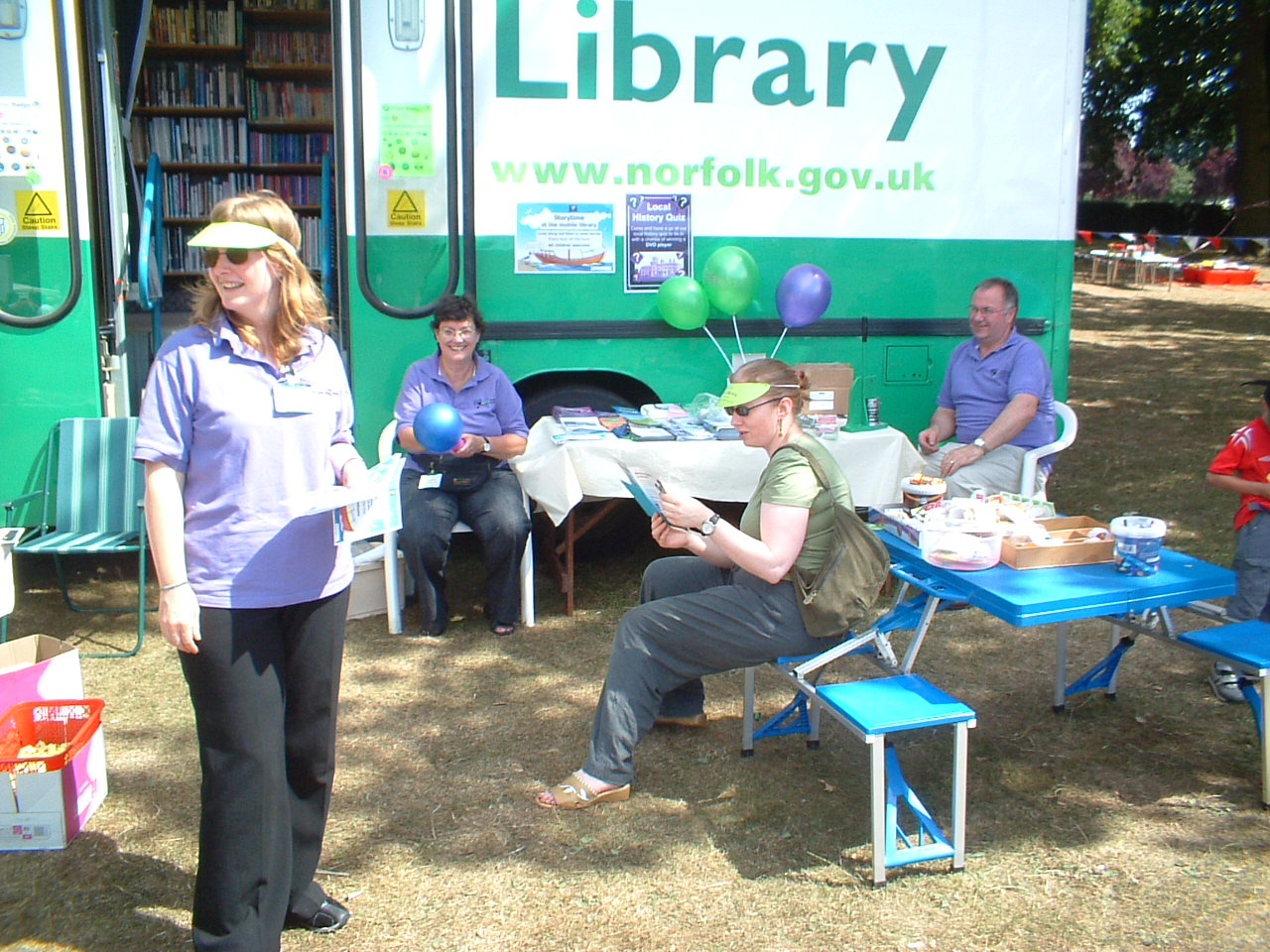
Some counties have done away with the mobile libraries completely. In Norfolk, they’ve cut down significantly during the time I was there. They’ve stopped the two-weekly routes now and gone on to once a month visits on most stops, with less people visiting. If it keeps on going like that, it makes you wonder if there is a future for the mobile library.
A new system?
I always thought a system that could possibly work would be to have a café in the library, a bus would go around the villages to collect the regular customers, take them to the library and give them a couple of hours there. They could have a cup of tea/coffee socialise with other customers, then back on the bus and home afterwards. They’d still be getting their books, and it might be cheaper than running the mobile libraries. However, it’s difficult.
Mobile champion
I have a copy of a newsletter from 2010 that says, ‘Mobile library champion of the year. Some weeks ago, managers were asked to nominate mobile library staff to go forward into the national awards to find the best people involved in delivering mobile library services in the UK. We had two managers put forward a member of their team for the award. As an authority, we could only forward one of these to the national competition. Both of the cases were excellent and had strong supporting statements from members of the public, but on this occasion, it was the submission for Andrew Stride which was judged to most closely meet the criteria.’
So, I was put forward as mobile champion of the year; I didn’t win, but I did get a certificate!
I had about six different managers while I was at Dersingham library. Jan was the one who gave me the job, then there was Helen, Jo and Karen (who put me forward for that award), and my last manager Kerry.
An EU Directive and driving licences
There was one other change for the drivers of the mobile libraries. When I first started, we just had a driving test, which was usually carried out by Norfolk County Council. The first one I did was with someone who used to train policemen to drive the police cars. He would sit beside you with his notes to see how you were driving and whether you needed extra training. We used to get that about once every five years.
Then they bought out the European Union Directive, which was for a mandatory qualification to drive a lorry, bus or coach professionally in the UK. It included having to do 35 hours of training every five years to get the driving licence. It was like a normal driving licence but was issued when you got that qualification. You had to carry it with you all the time. If you were ever stopped, you could be fined up to £1000 if you were driving without that qualification, so it was worth having. They called it a Certificate of Professional Competence (CPC). These are some of the courses I had to do to gain that licence.
- Safeguarding adults and children (3.5 hours)
- Professional drivers first aid (7 hours)
- Lone working (3.5 hours)
- Manual handling awareness (3.5 hours)
- Mobile library operations (7 hours)
- Eco-safe driving (3.5 hours)
- Driving regulations (3.5 hours)
- Driver safety (3.5 hours)
Some of these could be done via e-learning, such as the eco-safe driving module. You had to pass 93 percent on the assessment, and after you’d done 35 hours you were issued with the CPC licence, which is now a legal requirement for all heavy goods vehicle drivers. As the CPC licence must be renewed, you had to do the training every five years, so once you’d done one lot, you then started training again. All those courses were recorded by the County Council, who would let you know when you’d done your 35 hours, or what courses you needed to complete to keep up with it all. It was one of the things that changed from when I first joined.
Andrew Stride talking to WISEArchive in Hillington, King’s Lynn on 2 September 2025. @2025 WISEArchive. All Rights Reserved.