Jennifer talks about her time with the library service in Norfolk starting in 1981 on mobile libraries and finishing 35 years later as Head of the Library and Information Service and Assistant Director for Cultural Services.
How it all started
I started working for the Norfolk Mobile Library Service on the 1st July 1981. I had just finished doing a Library and Information Technology degree and as part of my studies had done a work placement in Norfolk. I wrote to the team that I had worked with asking if they would give me a reference and one of the managers wrote back and asked if I would like a temporary job on the mobile library filling in for a member of staff on maternity leave.
So that’s how I got to be working on the mobile libraries. I worked on the mobiles for a couple of years and then did various other jobs working through the service. Then in 2000 I became the Head of the Library and Information Service, and a few years later was appointed Assistant Director for Cultural Services as well as being the Head of Libraries. So from starting work in a temporary post I was involved with the library service for 35 years until I retired in 2016.
Travelling around the county in all weathers
In the early 1980s the library service in Norfolk was managed through five divisions – Central, Norwich, East, North, and West.
I was based at the Central Division Mobile Library Service in County Hall in Norwich which covered most of central Norfolk. There were mobile libraries covering other parts of Norfolk based in the other divisions. We were covering from just south of North Walsham right down to Diss and the border with Suffolk. The librarians each had a set of routes. We worked with a different driver each week so that all the drivers knew all the routes. We would do some routes every two weeks to the busier places, and some were four-weekly visits. I worked on one of the smaller mobile library vehicles which were designed to go down smaller roads. The big vehicles couldn’t go down some of the narrow roads in Norfolk, they were kept for places like Poringland, Mulbarton and Spixworth.
The busiest place I went to was Horsford, where we would spend the whole day with three or four different stops in Horsford during the day and on that route I think we were doing around seven or eight hundred issues each time. But some of the busier routes that went on the big vehicles would do over a thousand issues in a day. That of course was when we had a driver and a qualified librarian, so there were two members of staff dealing with a lot of customers and a lot of book issues.
The mobile library that I was allocated could be temperamental. If it went through very deep puddles, it would stop. There were occasions when we’d get to a bit of road and the driver would say, ‘Can’t do that.’
On one occasion the weather was okay when we went out in the morning and then we had snowstorms. At the time we were somewhere around Heydon and Marsham. It was literally a whiteout and the driver, who had been driving mobile libraries for many, many years, and had driven that route for many years, didn’t know where we were. We weren’t sure if we were even on the road at one point. It was quite scary. Weather forecasts at that time were mostly what you saw on TV the night before or heard on the radio so it wasn’t always clear what the weather would do during the day. If it was really wintery or roads were flooded in the mornings, then we wouldn’t go out, and then we would have to ring every single customer and tell them we weren’t coming. There were no emails and no texts. Some customers would very kindly volunteer to tell their neighbours or put up a sign near the mobile library stop.
The weather was quite a critical thing, as were traffic jams. There were occasions when we’d get stuck, particularly on the way back in the evenings, in the winter, and we’d get back in late. I can recall when I was based at County Hall, as Head of Service, and it was one of those days where the snow arrived in the late afternoon when traffic can become jammed up in Norwich. Most people had gone home, but there were a couple of mobile libraries that were still out. Somebody from the mobile library office and I were waiting for them to come back. I always had a good stock of biscuits, and we got through a number of biscuits that evening while we were waiting!
No facilities but there was tea and cake!
The mobile library vehicles in the early 80s were just a large van with books on shelves. Going over big bumps, braking sharply or turning a corner too quickly could be hazardous as the books could fall off the shelves.
The driver would bring a plastic bottle of water so we could wash our hands at lunchtime but there weren’t any toilet facilities. There was a very rudimentary heating system and I got chilblains for the first time ever. In the summer, when it was baking hot, there wasn’t any sort of cooling system. It wasn’t really until the very late ‘90s, early 2000’s, that the vehicles were upgraded enough to have toilet facilities on them and to be a bit more comfortable in the summer and in the winter.
Before we had toilet facilities on the vehicles, if we needed to go to the bathroom during the working day, then it was either behind a bush, or we had a number of mobile library users who, when they came on and it was very close to their home, would ask if we wanted to go to the loo while we stopped there, which was very kind of them. And invariably on each route there would be one or two people who would bring out a tray of tea or coffee and cake, which was always very much appreciated, but sometimes when you’re on a very strict schedule there just wasn’t time to have it.
We were also the recipients of everybody’s gardening gluts in the summer, so I’d go home with courgettes and dahlias, an awful lot of dahlias. Again, people were very, very kind and very appreciative of the service because at that time I think we were one of the only County Council services that were available to every single person at no charge. It was, and still is, a free book lending service.
One of my main memories of my time on the mobiles is the lovely people who used the service and how happy they were to see us. A lot of our stops were social events for the village or community. As well as seeing a lot of people who were choosing books for their whole family, there were a lot of retired people, and people who lived alone. Sometimes the mobile library staff were the only people they would see that day.
No mobile phones
Of course we didn’t have mobile telephones, and I remember one occasion quite early in the morning. It was the first stop of the morning, the driver parked, some library users came on the vehicle, and I went off to do a house call. When I got to the lady’s front door, I opened the door, and she was on the floor covered in blood. So I remember calling a neighbour, but I couldn’t actually run back to the mobile because I couldn’t leave this lady on her own until the neighbour had called for help. So the schedule went out the window, the driver didn’t know what was going on. He didn’t know where I was and 20 minutes later when I got back to the vehicle, he was so cross with me. I explained and he was still cross, which I can understand because we were late and that was going to upset everybody else unless we could actually pick up time during the day. But there was no way that I could have communicated with him. We just take for granted now that you have a mobile phone and can keep in touch.
Microfiche catalogue
I think probably the early ‘80s was when we saw a lot of change in all sorts of procedures because computers were just starting to arrive, but not computers as we know them now. When I first started, everything was pen and paper on the mobile libraries. People’s records were written on cards, we had to count the number of books people were borrowing and that was literally the only record we had of what they were borrowing. Then within a couple of years, the first bit of computerisation was a microfiche catalogue, which many people these days wouldn’t have used. But these thin, plastic cards had records on them that had come from a computerised database and that told us where all the books were kept and which library they were in. We didn’t have microfiche readers on the mobiles so any queries or requests for books had to be written down and sorted out when we got back to County Hall.
Time and motion study
For most of the two or so years that I was on the mobiles there was a driver and a librarian but it was around about the time that I moved to another job that there was a time and motion study that concluded mobile libraries should have a single person who could drive and do all the book related issues. At the time it felt like a really bad decision because the routes were so busy that they needed two people, if for no other reason because they were so busy. But over time, I think that the usage has reduced and it’s quite possible for one person to do the majority of the routes.
My recollection is that the primary qualification for the person was that they had to have an HGV licence, particularly for the big vehicles. At that time, a lot of the drivers had been working for the service for quite a long time, so they were very familiar with the routes, the books, the customers, their likes and dislikes and things like that. I think over the years having that very special combination of being able to drive a large vehicle and have really good customer skills and book knowledge is always what the library service was looking for. From a legal perspective the driving qualification is the really important bit. The ideal is having a driver who can talk to library customers about books and understands enough about books and the stock on the vehicle that if somebody says, ‘What can you recommend?’, they can recommend a title, and for the member of staff to say, ‘What do you enjoy?, and then to be able to find something that they can take home and enjoy.
Busy times
At the time, from memory, we would start the first stop around about half past nine or ten o’clock, having left County Hall around about nine, and then we would be back for five in the evening.
There was a point where mobile libraries started going out in the evenings to some of the communities around Norwich where in many households everyone was working during the day. I think the service has tried to respond to how communities have changed, so for example stopping outside schools at the end of the school day so that people could come on and school children could come on the vehicle at that point.
The way people use libraries has changed. In the early 1980s there was often one person at home during the day and they would often come on the mobile to collect books for everybody in the household. Whereas now you have a lot of households where everybody is out at work, and they can read books through the internet and e-books. It’s a different type of borrowing habit these days.
If we went to Horsford for the day, we spent the morning in the pub car park and then in the afternoon we’d go somewhere else in the village, and on those long stops very often there would be a queue of people waiting to get on the vehicle. Then there would be a few housebound people who I could walk to, to deliver their books while the driver was still on the vehicle. That was one of the issues that we couldn’t work out when it was suggested that the mobiles could be single staffed, how that was going to work, but you make it work. On housebound visits the vehicle often stops right outside that house and the vehicle is closed while they visit the person who is housebound.
After the mobile library service
When I first moved jobs after being on the mobile libraries I was request librarian for the Central Division.
Every book that a person requested was written out in triplicate and in those early 1980s the only way that you could find out if the book was in stock in Norfolk was to look through an enormous card catalogue. The card catalogue took up a room that was probably 150 meters long. A very large room that was literally full of drawers with cards in, with each card having the details of the book on it and the locations of the book. And if it wasn’t a book that we had in stock then we had very large volumes of national publications, listing where we could buy a book from or who might have it in stock. So it was a very slow process.
We would get requests from people who had read about a local book in the Sunday newspapers and if we knew that it wasn’t on order then we could order it and sometimes that was quicker than tracking down a book that could be anywhere in the country. So that was my role for a while. I had somebody working with me and we were dealing with all the requests that came in for all the library buildings and the mobile libraries in the Central Division.
With requests for the mobiles, when a vehicle goes out to a community once every four weeks then the book may arrive at headquarters the day after the vehicle’s just been out. So it’d be a four-week wait until the book could be delivered to the reader.
Tracking down Tia Quendo
It was very paperwork intensive, and you’d get the most peculiar requests sometimes because people would hear something on the radio or they would write it down as they thought they’d read it. I had a subject request once for any books on Tia Quendo which I’d never heard of. I looked it up in encyclopedias and there was nothing related to it at all. I don’t know why, but we had a feeling it was something to do with martial arts. So I rang somebody in the martial arts community and they said, ‘Oh it’s Taekwondo.’ But just to get to that point probably took me a couple of hours. Whereas now you’d Google it. It would tell you your spelling’s wrong and give the right answer. But that one really stuck in my mind because it was such a puzzle. What was this thing? And he had read it in the paper, so it had to be real. And there it was real; it was just badly spelt.
Moving on and computerisation
From the request service I moved to a temporary role again, filling in for maternity leave as librarian at Aylsham Library. In 1985 I was appointed librarian at Attleborough Library. Then in 1987 there was a restructuring of the service and as well as being the librarian at Attleborough, I was responsible for a group of libraries, so I started travelling around, visiting them, and having a lot more meetings and managing more staff.
While I was the group librarian based at Attleborough Library, we started the process of computerising the library service in the late 1980’s, which meant firstly selecting a computer system. I was part of the team that had the task of selecting the system and getting it installed across the county. The team visited other counties that had already introduced computerised services to see different computer systems and to find out how other services had moved from paper records.
Computerising a whole library service with around a million books where every single one needs to be put onto the computer and every single library user needs to be issued a card and have their details registered on a database, was a big logistical exercise.
As part of that, of course, we needed to train all members of staff on how to issue books on a computerised system. So one of my roles while I was still based at Attleborough was to do some of the training of every member of library staff in the county so that they could use the computerised system.
We called the computer system Norlink and the first library to go live was Attleborough on 23rd October 1989. It took about six years to computerise all 48 libraries and the mobile libraries.
The Fire and after
In 1994 there was a fire at the Norwich Central Library, which destroyed the library. Shortly after the fire I was asked to go back into County Hall temporarily to support the senior management team, which was keeping the whole of the service running as well as trying to develop a temporary service in Norwich and think about how to re-build the Central Library. Then I became an Assistant Director for the library service in 1995.
The reaction that the community had to the loss of Norwich Central library showed how much connection people felt to libraries. When the Norfolk and Norwich Millennium Library opened within The Forum in 2001, there was an enormous sense of pride and curiosity in the community. There was also a huge amount of interest nationally and internationally because it was one of the first of a new generation of libraries. Many people from other places in the UK, and from other countries came to visit in the early days. We know they took away ideas which they built into their own new library developments. It showed how investment in libraries was quite an important factor in the early 2000s and that for a library to generate a pride in the community like that is not something that would have been considered I think in the 80’s for example when libraries were possibly quite low down the priority list for funding. There was very little publicity about them, and there was nothing ever featured in a newspaper about the library service doing anything particularly radical. Then it started to change and I’m very proud of having been able to be part of those changes in Norfolk and to have been able to help to inform the development of some other libraries.
For example, during one of the visits to the Norfolk and Norwich Millennium Library from another authority which was in the process of designing a new library, I said to the visiting team that the children’s area needed to have double the space needed for books, homework space etc., because there needed to be space for parking buggies. The architect was horrified but the children’s librarian shouted with delight because he had been saying the same thing and nobody had really been paying any attention. But if an adult brings a child to the library these days in quite a large buggy and if you’re going to have a bounce and rhyme time, then you’ve got to park the buggy somewhere. So that was an interesting conversation. I don’t know what happened in that library and whether they did have enough space for the buggies, but I helped the children’s librarian make the point.
The importance of the Library Service
The Library Service is still one of the only public services that is freely available to everybody who wishes to use it and when I reflect back on some of the people I met who were using the mobile library and the feedback that we got from those readers, it’s clear the service was important to them. The contact with library staff was also important to them and I remember some of the successes that we saw from young people who had been borrowing books from the mobile library. We’d hear about what they were doing because their parents would still come on the vehicle. Then they’d come back for school holidays or university holidays, and they’d make contact and say what they were doing. It showed how important it was, and still is, in large rural communities to have that ability to borrow books and how it made and can continue to make such a difference to people’s lives.
The future
The Library Service is available to everybody. A library service is a way of having access to words in all forms, not just the written word. I’ve visited libraries all over the country and you see big signs that say libraries are not just for books and it slightly demeans books when you say they’re not ‘just’ for books. Books themselves are important and have been around for hundreds of years. The written word has been around for thousands of years – but the library also offers the ability to meet up with other people, to learn, to make connections.
A lot of other agencies use libraries because they know that is a way of reaching people in the community who they may not be able to get to in any other way. For example agencies that support new parents, and the work that the library service does itself with things like Baby Bounce and Rhyme Times which introduces babies to words, rhythm, and sound. For a lot of young parents who may not have been brought up in a household that read a lot, libraries can help them to have the confidence to read to their children. Introducing concepts that are in books is important. For example if you live in Norfolk you can meet an elephant on the page of a book long before you might meet an elephant in real life, so it’s part of the experience of learning and growing. There’s a saying ‘a child who reads more, succeeds more’ and there is a lot of evidence from the Reading Agency and other organisations that shows that that’s still the case. There are also the activities that help to connect people, such as knit and natter sessions, and advice services for everything from health to money issues.
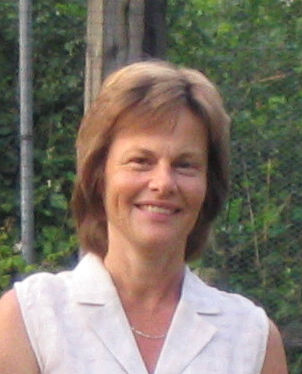
Jennifer Holland (b. 1959) talking to WISEArchive in Old Buckenham on 19th November 2025. © 2025 WISEArchive. All Rights Reserved.