George talks about his association with Wensum Lodge and particularly with Jurnet’s bar and his experiences there as a musician.
How it started in Norwich
I wasn’t a professor in the 1980s or anything like that, just a young guy in my 20s. I’d gone to university away from Norwich, and then I didn’t know what I wanted to do with my life. So I came back to Norfolk, staying with my parents on Unthank Road for a while. 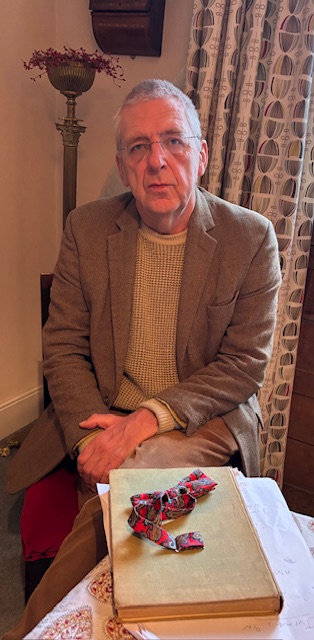
In a way the music side was my rescue. I’d been playing my bass guitar by myself and then I bought a double bass round this time. Although I’d been playing for a decade or so I wasn’t socially confident enough to play in a band.
My granny in Glasgow, who’d saved a little bit of money each week for her grandchildren, died and gave us all £100 or £200, which we’d never had before. I spent my money on the double bass that had a two-foot crack down the side. I stuffed a sock in it until later I had the money to have it repaired properly and set up reasonably nicely.
So, here I was in the 1980s, drifting – recently graduated and involved in sort of alternative culture – radical politics. I’d been heavily influenced by the punk scene and DIY. Also, my dad was a local semi-pro jazz musician (though I didn’t know anyone else my age who liked jazz as I did).
One day I was in a job centre (because I was on the dole in Norwich) and saw a notice asking, ‘are you a jazz musician?’ In my mind I was a jazz musician even though I hadn’t understood it yet. I didn’t even go there and then for the job. I came back a few weeks later and weirdly the job was still there. It was like a dream. So I went for the interview for a new thing called ‘community music’. They were recruiting 12 musicians to be involved with this in Norwich. It was an offshoot of a scheme originally set up in London. It was for massaging the unemployment figures! If you’d been on the dole for a certain amount of time you were eligible to sign a year’s contract.
So then I started working as a musician in the daytime on community music, learning how to play and be more disciplined – how to teach and talk with musicians and the people who came to our workshops. It was really great.
Quite a lot of people from those early days at CME (Community Music East) in Norwich in the 1980s have had important roles to play in the music and community arts scenes in the area.
PhD study in Glasgow and summers in Norwich
After a few years working as a community musician I thought if I did a PhD I could get a job as a lecturer and play music in the evenings. One of my lecturers when I was at college (after I got chucked out of uni.) did that. I started my PhD back in Glasgow, my home city, and then began playing more music in bands up there.
Sometimes in the summer, my then girlfriend Emma (later my wife} and I would come back to Norwich for a few weeks. I started in those summer times to get a bit more money teaching English as a foreign language in the summer schools. Lots of foreign youngsters would come to Norwich and stay for three weeks, get some language tuition and then go home with improved language capacity. Or that was the theory! I was one of their teachers for about three or four years. That’s when I first started working at Wensum Lodge.
So here I was back in Norwich. a bit more outgoing, more confident. doing a doctorate in Glasgow. I’d got a few years of music behind me. I was teaching in the summer schools. I’d got a bit more energy and drive and more sense of direction.
The French and Italian students – I particularly remember the French ones – were great. I was only in my 20s and they were early to mid-teens. I wasn’t so far away, I could have been their big brother. There was a lot of fun and laughter going on with them each summer round at Wensum Lodge. All the English teachers would be there, and we’d all hang around in the evening and have a few beers, probably get a bit pissed and maybe other things, too. In the daytime, just to be there, to hang around Wensum Lodge, teaching these youngsters, and having fun with them, was really great.
I remember one time I came out after my three-hour morning session and I had to get on my bike. I had a nice old butcher’s boy’s trade bike I found in a squat when I as a student in Hull. I’ve still got it actually but can’t ride it anymore – I can’t get up the hill on it now, it’s too heavy. When I went to get my bike it wasn’t there. Someone’s nicked my bike! After about 10 minutes of being absolutely furious, I could hear all these students laughing. They’d hidden my bike somewhere. And they were all waiting …
On another occasion the students gave us cards and presents. They gave me a bow tie! I’m sure it was a joke because I was a post-punk, loving the music and I didn’t have that aesthetic about me at all. I still have this bow tie, even though I’ve never worn it. It’s a red and blue paisley pattern. It’s not one you tie, it’s one you clip on. It’s in the photo. When I look at this hanging in my study in my house I think of all those young French and Italian students 40-odd years ago when I was first trying to learn how to be a teacher.
Wensum Lodge summers – feeling the genius loci
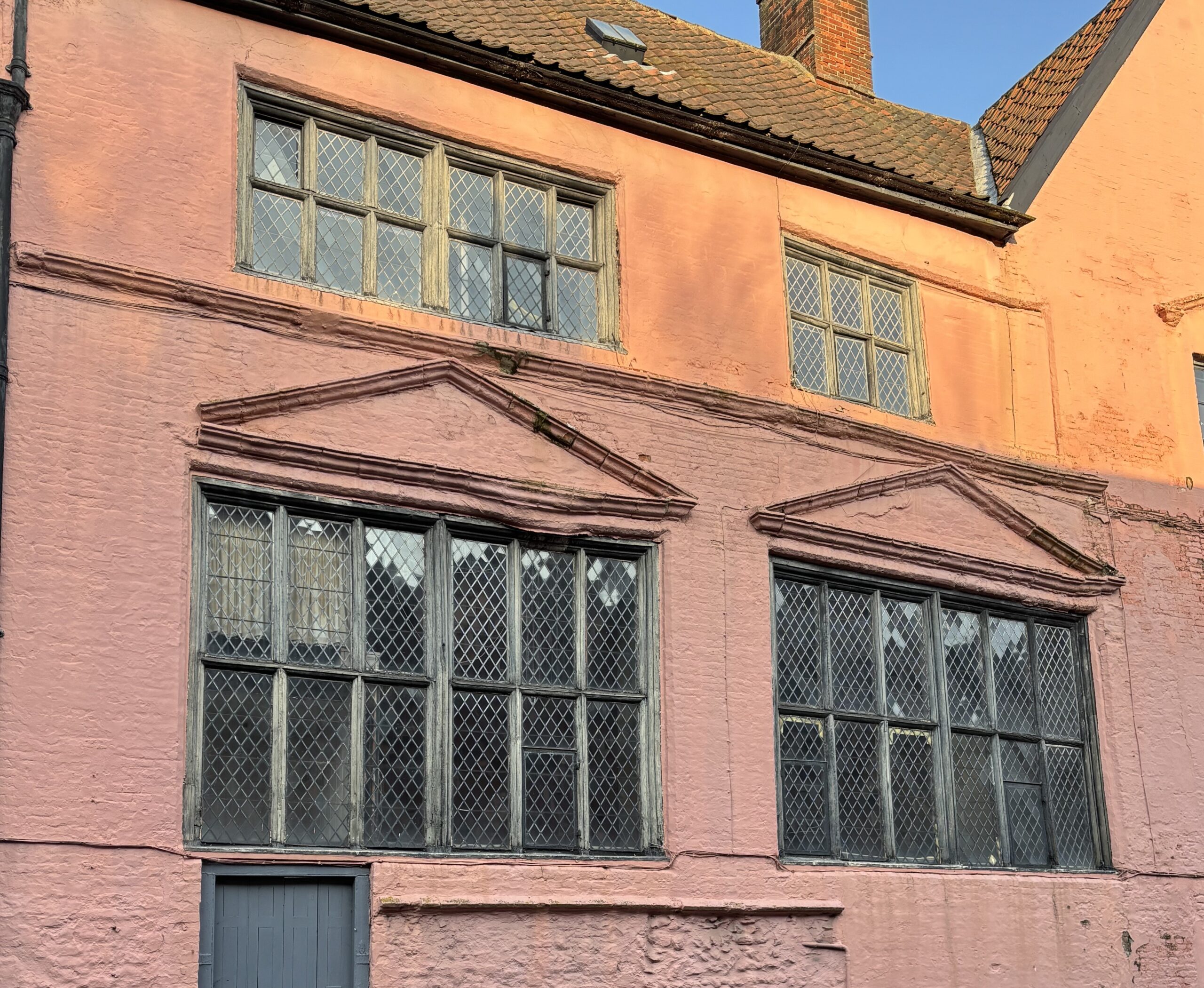
Wensum Lodge was a really nice location. You’re near the city, on Riverside, all these lovely historic buildings around you. That was on King Street in the daytime. Of course King Street was a bit dodgy in the evenings then because it was a red light district. But in the daytime, it was all absolutely fine and very safe.
It was fun to drive down from Glasgow and know we were going to be in Norwich for six weeks. The weather would be warmer, you’d see all your old pals, you had some money coming in and you didn’t have to think about the PhD for a while. You were hanging around these nice classrooms, these lovely buildings in an historic part of the city and this bow tie symbolises this period in my life, which included Wensum Lodge and teaching these young international students how to speak English. [The tie is in the picture at the beginning of this story.]
The other point was that at the time the students were all continental, so they wanted to hang around in a café. Jurnet’s was there. A bar room and then a room off that. Behind that was a little area where the pool table was. They’d all hang in there in breaks. I would go in there too and have a cup of tea in this rather dark, damp, musty-smelling space. But it would be full of the sounds of different languages and these youngsters in there having fun, playing pool, sitting around, smoking. You could smoke in those days indoors, of course.
Even though it was only for maybe three summers, Jurnet’s Bar really stayed in my mind as a kind of powerful space. That spoke to me about the way in which Jurnet’s had a genius loci about it: a sense of the magic of space, the magic of place. It stayed in my mind and made me pleased that I’d found it and been part of it.
In 1984 I was at the Stonehenge Free Festival. At the last one in 1985, the police broke it up, the Battle of the Beanfield, trashed all the travellers, made mass arrests. It was a terrible rural riot and a complete travesty of justice. When I was at Stonehenge in 1984 I was starting to be a musician, thinking about my PhD and the importance of place and space. To be at Stonehenge on the summer solstice with thousands and thousands of basically the rabble-raising troublemakers of Britain at the time, the old punks, all the older hippies, all the anarchists, all the troublemakers, 25,000 people there around the ancient stones, gave me that sense of genius loci. The place is powerful, it signifies; it speaks to you, and you internalise it. And I had a little moment of that kind of special feeling with Jurnet’s in a way, because Jurnet’s was a magic, magic place. It was a dive into the past, a connection you didn’t necessarily know you could have.
Coming to terms with the reality of moving back to Norwich
Even though I moved away from Norwich, Norfolk, England, for years and years, this always stayed in my mind and I thought about why it was special enough that when I came back to Norwich I made a beeline for Jurnet’s.
When I moved back to Norwich about 10 years ago, it was quite a difficult time. My mum was thrilled that we’d come back but our daughters were grown up and we we’d left our family life in the north of England.
We’d kind of gone full circle, and we were back where we started. It was quite a difficult period negotiating that, especially because it was combined with the traditional Norwich thing. ’Oh, it must be great being back in Norwich. That’s brilliant, Norwich, you must love it. Because you went away, everybody comes back to Norwich, you can’t keep away from it.’ All that sort of stuff. I just used to say,’ yeah, well, it’s okay.’ But you could see their little lips quiver with disappointment, as though you were betraying the city in some way, or challenging their choice and taste or something.
I’m not Norfolk-born, though I am a bit of a Norfolk boy. But I wasn’t really liking living back here at first then. So I stopped saying what I actually thought and would just say, ‘yeah, it’s really good.’ What I really thought was that Norwich was almost completely the same. When I would go to those places I’d gone to in the past, they all looked the same, 30 years on, but at the same time it was completely different! (My psychogeography was really screwed.) With hindsight that’s kind of an obvious thing to say. But the experience had to be negotiated and gone through.
It took a year or two to do that. Someone said, ‘Oh, we’re going to this secret bar, nobody knows about it. It’s on King Street.’ But there were hardly any pubs there at that time, the Ferry Boat was gone. They said, ‘To get there you have to go around through a yard and then round the back and then get in from a back entrance. And I said, ‘Oh, do you mean Jurnet’s?’ Their jaws dropped, ‘How do you know about Jurnet’s?’ ‘I used to go there. Is it still open? Oh, fabulous. Let’s go down to Jurnet’s’. As soon as I walked in and I looked at the bar it just felt completely the same. But this was in a good way.
I remembered the price list sign with little white (later they were yellowed) plastic letters that you pushed into a black sheet with holes in it. It would say something like Adnams, £1.40 or £3.60 or whatever it was. The prices had changed, but the lettering was the same, 30 years on.
So here I was in this ancient place with my now theoretical understanding of genius loci, because in the interim I’ve written books about space and festivals, and protest and the specialness of landscape and music as an academic. Being in Jurnet’s again was a real reassuring presence for me. It made me think, apart from my family and then some of my older friends, it wasn’t a mistake to come back to Norwich. Something might happen here for us.
I think what Jurnet’s did for me then was remind me of when I’d messed up my A-levels, graduated from college … I got chucked out of uni, so God knows how I became a professor But I’d done it in the end.
Getting back to learning about Norfolk and the Jurnet’s experience
After I graduated, I was living in a freezing cold winter let in Wells in North Norfolk. I had my new double bass, the one with the sock jammed into the crack. I was trying to learn how to play it, my fingers were full of blisters and bleeding trying to play this instrument.
That winter in Wells I was on the dole and writing the Great Norfolk Novel, right? Alas, Sebald got there first. (But is that a novel? Personally, I just think it’s notes towards fiction. But you can’t say that at UEA, my employer, because that’s sacrilege.)
So there I was in North Norfolk, and I got back into my interest in local stories and tales and writing. That was a really important thing for me.
I also started to teach myself more about Norfolk history, about the weird places and practices of Norfolk, the legends and all that kind of thing. So when I got back to Jurnet’s 30 years on, it reassured me. It also gave me this sense of a magical place again. I started to really sit and think, what was it? Why was it magic? Jurnet’s did have that sense of secrecy, of being unknown.
If you lived on King Street, obviously you knew because you were a member of the club committee or something like that. Jurnet’s was a little club. You could be a member. When I moved back and I found it again, I immediately joined it. I think it’s the only club I’ve ever been a member of, not being at all a club kind of chap.
It’s sort of in the architecture, the fact that it had no street presence, no signage, you have to go along the street. There is a door, but it doesn’t open. You have to know to go around the back, down the side, along the alley and through another unprepossessing looking door. Or rather a sort of foyer. And then through that door, you’re in medieval England. This was an amazing thing. (I feel my tenses are getting mixed up here between past and present. But that’s the Jurnet’s Experience.) It had a hidden location and you had to know that. It was attractive that you had this inner knowledge. And it was literally ancient knowledge.
The architecture dates back to the 12th century, and this is another part of the sense of the magic, the spirit of place about Jurnet’s. It was a living, breathing space of the history of Norwich.
When you’d got through this 1940s or ‘60s foyer building, you opened the door to this room and suddenly you were in a medieval undercroft, with the vaulted ceilings. You were in this space maybe eight hundred years old or a thousand years old. On the outside you could see the ancient building and the Music House. That was five, six, seven hundred years old. Just a typical ancient Norwich building! We’ve got so many of them, but they’re amazing. One of the things I loved about the undercrofts, once I started doing a bit of research into them, was that they would often be two or three hundred years older than the ancient building on top of them.
You just walked into this space and there was a bar, and some nice old seats and stone walls. Another aspect of its genius loci site was that you had to go through a crack in the wall to get from one room to the other. It’s true: a crack in the wall. By now it was quite a big crack, but at the top you could see that the wall had come apart. The structure had split and was still holding the building above it up. In another cellar or undercroft next door, bands would play. That was just fabulous: these two conjoined spaces with through space being a crack in the wall.
Being maybe a thousand years or eight hundred years old it had a wonderful, wonderful kind of sense of itself. The sort of experience of being in there, not just that you’re in this particular ancient space. I’m not sure how many undercrofts there are in Norwich, is it 60 or 70? Two or three pubs have an undercroft downstairs as well, quite the same as Jurnet’s.

But Jurnet’s had that extra thing about it, the crack, the ancientness, the no street presence. You’ve got to go to this secret area to find it. But you were literally surrounded by the ancient sense of Norwich itself. It was dark and it was damp, so there was a specific smell to it as well. You could close your eyes. ‘Oh, I must be in Jurnet’s now’. If you had one of those smell box experiences, what does this smell of? Oh, that’s Jurnet’s bar, isn’t it?
Like I said, King Street itself was a bit of a dodgy area in the 1980s because it was still a red light district. There wasn’t a Waterfront club or anything like that so there wasn’t any through traffic of young people going to a music venue and it still felt a little bit dodgy, a little bit criminal around there.
I didn’t like that atmosphere. I didn’t like the idea of a red light area. I didn’t like the men that would hang around there and drive along slowly in cars or that would be talking to young women who were working as prostitutes.
But sometimes you would force yourself through there because you knew you were going to get to Jurnet’s which had a specific clientele of people who knew about it and wanted to be there as part of it.
Connections and launching on the local scene
My wife Emma has connections with Nugent Monck, the man who set up the Maddermarket Theatre. He used to put on plays and performances, including ones to do with the mystery plays, in two other locations around the city. One was in the top room of his medieval house on Ninham’s Court, which I hope hasn’t been allowed to go to rack and ruin. The other was in the big hall of the Music House. So I had this tangential connection to this space of culture through my wife’s link with Nugent Monck who had put on some of his earliest plays in the rooms above where I would be going in Jurnet’s in the Music House.
I’d been playing double bass for 30 or 40 years by then and was determined to launch myself on a grateful Norwich local scene! So I started playing with a band or two. There were nights at Jurnet’s where they would put on four or five acts. Nobody really got paid, it was just a way of getting to play. Maybe 50 or 60 people would be crammed into Jurnet’s, and you’d be one of the acts.

I was in this lovely trio at the time playing double bass, trumpet and accordion and voice. The accordionist singer wrote all his own songs and also drew a lot on Jewish music. To be in a band with them was quite challenging musically, because a lot of the music would be on an offbeat and the bass has to play on the other beat of it. When we all locked in, it sounded just great and everyone loved it. But occasionally it could drift … And if a song went wrong, Joey the singer would just say, ‘Hey, anyone know us? Did it go wrong? Come on. Nobody‘s died. It’s just a song. We’ll get the next one right.’ He was a great front man who could really do some brilliant patter with the audience, lovely accordion and great songs with a very strong Jewish influence.
I’d never really thought about that much; I was interested in undercrofts in ancient Norwich. I knew about the Jewish pogrom from the 1200s, 1300s, and so on in Norwich, but I didn’t know much about the history of Jews there. Jurnet’s sounded a bit Jewish. This was, with hindsight, a slightly surprising gap in my knowledge.
We always got a great reception when we played at Jurnet’s, because everyone loved that band. It’d be really packed, you’d have a tiny space with a double bass in the amp, really crammed in, and the trumpet player doing his thing; Joey sitting on a stool playing accordion, singing his songs. We’re playing some kind of fast instrumental, with a lot of semitones in it, lots of easterny kind of sounds in there, very Jewish sort of use of music. Everyone is really enjoying it.
I’m thinking, we’re playing sort of Jewish music now, and looking in the audience. There are some old family friends who’d come along that night, part of our wider family for decades. One of them is a New York Jew who’s lived in North Norfolk for 65 years and I’ve known her for all the time that I have been in North Norfolk. Sitting next to her were two other family friends who I knew were both Jewish as well. The looks on their faces of intense pleasure and a sense of special resonance! Of course, it’s Jewish music in a Jewish space for a Jewish audience by a Jewish band leader. I had this little part to play in it, and that really spoke to me about the different ways of understanding space. That there was a different way in which you could have a specialness of space.
I keep going back to the genius loci, that the spirit of place could mean different things to different people. It spoke of some sense of their heritage. That was really wonderful.
The Punch House Band
Then I joined this Norfolk folk band. I’d always been interested in Norfolk music and Norfolk history. I had a shelf or two of books about Norfolk that I carried around from flat to house in Scotland and the north of England in the 30 years I was away. One night in Norwich we were in a pub and going to see a friend of a friend. He started playing songs about East Anglia, and then about Norfolk. I was really impressed with it.
I’ve always been a jazz improviser, never a folk musician or anything like that. To be honest I found folk music too predictable, but I love these songs that resonate with me about Norfolk. Eventually I formed a folk band with him, playing East Anglian songs, lots of originals and some standards: Norwich Gaol, or Pretty Nancy of Yarmouth or Fakenham Fair. Traditional or neo-traditional songs like some of those, and others we wrote together.
The band is called the Punch House Band and there were five of us. Banjo, guitar, cajon percussion, lead singer, and then double bass. We started to get work around the city and we played a few of those nights at Jurnet’s. We didn’t get paid to play there and it was a lot of effort, five people turning up to cram into a tiny space to play for 30 minutes, and then take all your gear out again. We decided quite quickly that we needed to just set up and play our music, not be part of something else.
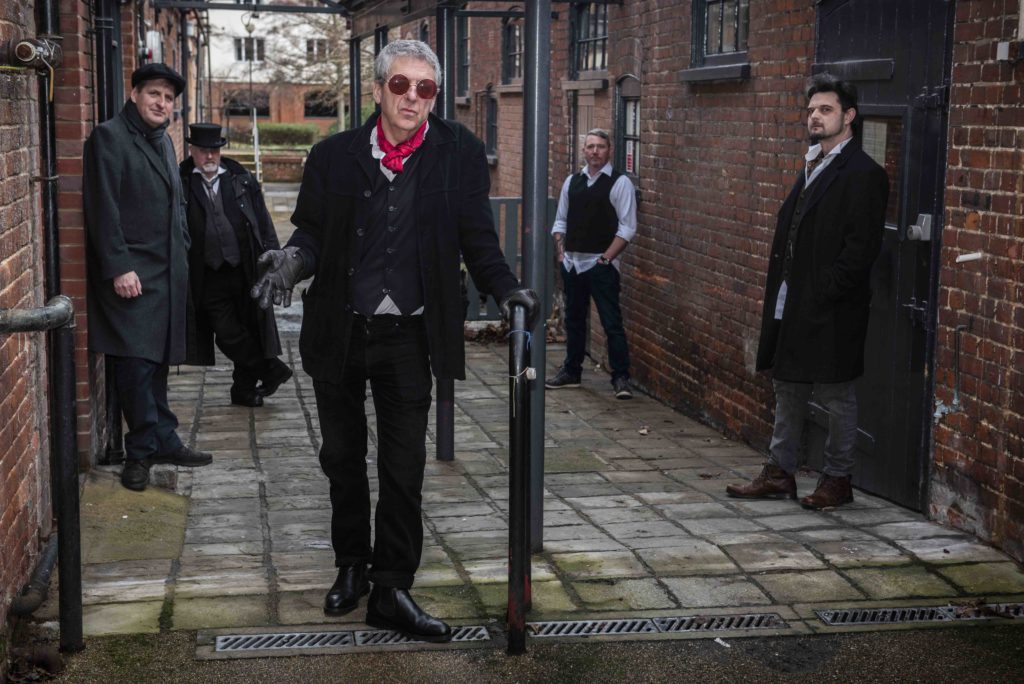
After a couple of years we wanted to record a few videos of the band playing live and chose to do that in Jurnet’s. Al Pulford, a local film maker and photographer whose speciality is live events, came and we recorded a couple of versions of three songs. And where would we find a resonant space for the shoot? So we went to Jurnet’s one Saturday afternoon and recorded these videos, which Al then edited. We did a moody photo shoot in there too, and outside around Wensum Lodge.
Since Jurnet’s is now very sadly closed, I feel like those little videos of Punch House Band playing in Jurnet’s singing songs about Norfolk are important. Obviously, if you’re a big star on YouTube, you get 100 million views. Well, we’ve got like 451 views or whatever. But it doesn’t matter. ‘Locally sourced’ is how we describe our music. They’re our tribute to a local source. You can find the videos on YouTube.
I feel they’re important because they’re little documents of a time when Jurnet’s was a buzzing, thriving space with live music, and which could resonate for different kinds of audiences. I was really pleased, thrilled even, to be a part of that. One of the recordings was Peter Bellamy’s Norwich Gaol. Bellamy was a well-known Norfolk folk singer and songwriter in the 60s and 70s, and we did that as a kind of tribute to him.
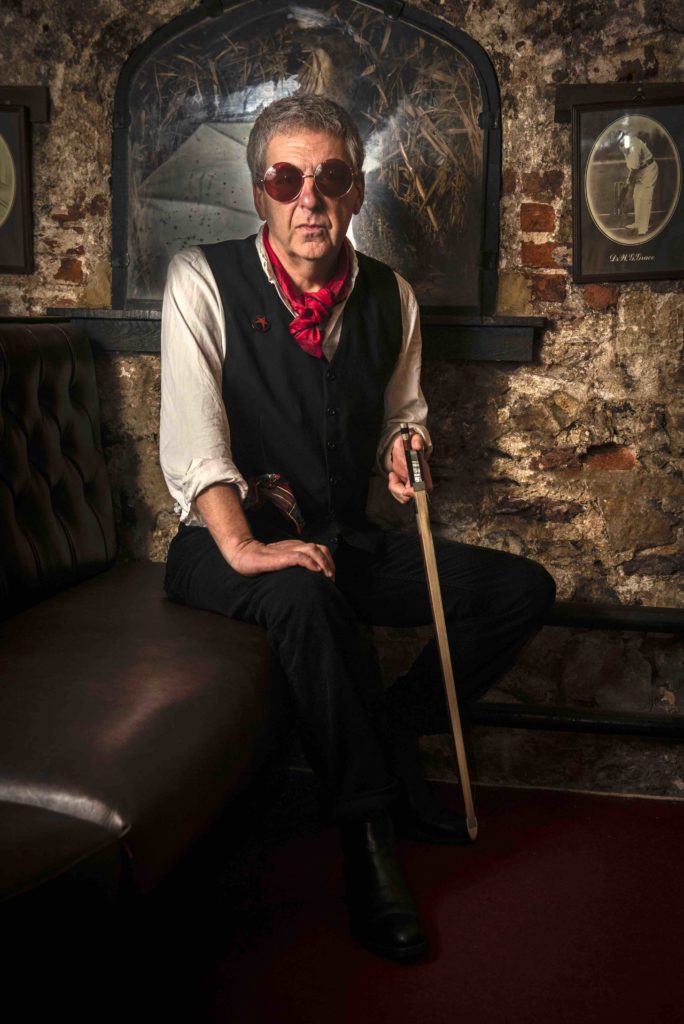
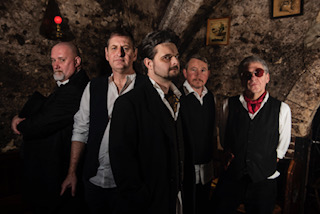
The Punch House Band Peter Bellamy’s Norwich Gaol
I Walk by Night
Another was a song that Tim, our band leader, had recently written called I Walk by Night. One night, Tim had been around at our house with his wife, Amanda, me and Emma, and we all sat around having a few drinks, and some food.
Tim asked what my favourite Norfolk book of those I’d been carrying around for 30 or 40 years was. I said instantly, ‘It’s I Walked by Night.’ It’s by Lilias Rider Haggard, daughter of H. Rider Haggard, who wrote adventure books like She, and King Solomon’s Mines. But it’s not really her book. The text is the memoir of the King of the Norfolk Poachers from the 1930s. It’s a bit stained, a bit scabby, but you can see that embossed into the hardback are a set of footprints of an animal.
Inside it says inside George McKay, Winter 1984, Fakenham. So that was the winter I was writing the Great Norfolk Novel, unfinished by me. This is my favourite book, because it’s basically a transcription of the way of life of this guy, the King of the Norfolk poachers, who’s anonymous in the book. We all know his name now, but I like the anonymity of it. The transcription means that it really captures the sense of a kind of East Anglian – Norfolk, Suffolk – dialect. When I first read it, I thought it was like a stylized modernist novel. I’d been to uni to study English. I’d read my Joyce and Virginia Woolf. It spoke to me like a sort of proto-modernist thing, like a Norfolk version of a modernist novel, because it was an autobiography transcribed from his oral testimony and edited by Lilias Rider Haggard, but in his words, and he wrote lots of them down himself. For example, the word hawk in the book is spelled H.O.R.K. He uses proper Norfolk words like harnser for heron. He’s very anti-authority, he’s very anti-war. So in all these ways, it spoke to me as a young man. And so I was saying to Tim, this is the book that really did it for me.
Lo and behold, Tim goes away with my book and writes a terrific song about poaching in the 1930s called I Walk by Night and that’s one of the ones that we recorded in Jurnet’s. Suddenly it felt like these different aspects of my life [came together]. I’m just the bassist in this band. There’s four other musicians. I’m just standing at the back playing bass.
But it came out of this book, which I bought in Fakenham in 1984, when I lived in Wells, not knowing what I was going to do in my life. Here we were in Jurnet’s, which I’d been thrilled to be part of since I’d come back to Norwich, probably five years earlier. And here I was playing with this folk band singing songs about East Anglia.
The whole thing was a package of terrific cultural, social, historical resonance, all taking place in a magical space, which I’ve known for decades was magic and was still there.
This was one of the great things for me of coming back to Norwich, that Jurnet’s was still there. So the postscript to the story is a few years after that, I was going to have my 60th birthday party. We booked Jurnet’s early on in the year, and I was going to put Punch House Band on and maybe reunite the Joey Herzfeld trio, play some of those songs, invite everyone I knew. Then the pandemic came, and then Jurnet’s shut down, and there was no birthday party. Jurnet’s never opened again. But all of those things that I’ve just talked about confirm for me the magic space that was Jurnet’s Bar, part of Wensum Lodge, between King Street and the River Wensum, in the fine city of Norwich.

George McKay talking to WISEArchive on 19th February 2026 in Norwich.
@2026 WISEArchive. All Rights Reserved.