Joyce remembers her time working for the mobile library in 1979-80 and how it was much more than just about the books.
First impressions
I worked on a mobile library coming out of Great Yarmouth in 1979 to 1980. I joined the mobile library to get a library job closer to home. I was travelling 30 miles a day to Lowestoft Library to work in the reference library. Whilst I enjoyed the job, actually being able to catch a train to work was the real draw. I finished in about November 1980.
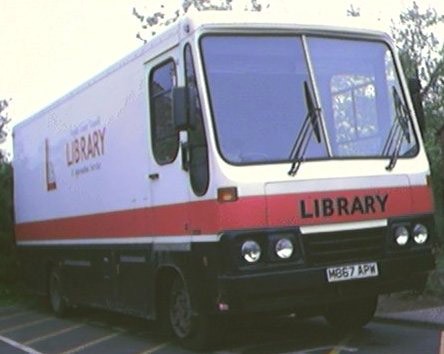
The mobile library that we had was a heavy goods vehicle, so it was very large which was an interesting challenge on some of the lanes we had to visit.
We had a stock of about two and a half thousand books. I suspect a thousand of them were actually on the mobile library and out among customers. We used to travel out from Great Yarmouth as far as Waxham on the coast, went inland to Burlingham and down onto the marshes to places like Wickhampton, Halvergate and Tunstall.
I did enjoy meeting people and I think on a mobile library you got to know people. They always used to say that Norfolk people would accept you after 20 years, but they accepted us straight away on the mobile library and were very open with us. You really got to know people quite quickly, even when you only visited them once a month.
People would come and have a long chat with you while they were choosing their books which sometimes was just a matter of them picking any old book off the shelf and throwing it in a bag, but it was good fun.
The routes
The drivers made the job so much better. At that time you had a driver as well as a librarian on the buses. The time spent at the stops varied. If you were just going to one house it might only be 10 minutes, but where there were more houses, it could be an hour or an hour and 20 minutes. It just depended on the situation really. I’m not sure but I think someone in a house that was situated on its own could request a stop from the mobile library.
One of the unusual things we did: you weren’t supposed to stop within two miles of a library but every fortnight we went up to a stop near the racecourse at Great Yarmouth where there were a lot of holiday bed and breakfasts. They must have demanded a midweek stop so that the landlords and landladies could come out and choose their library books. That was accepted and they had a very good service as we were there for probably three quarters of an hour a week and they all came on to the vehicle. It was very heavily used actually and so I imagine there must have been a historic request for that stop.
A lot of places only got a monthly service, but the larger places got a fortnightly service. One of the busiest places I served was Acle, before it had a public branch library. On a Friday (bearing in mind you had to drive there, set up, move several stops in the day and you would be leaving at about half past four because it was a Friday to get back), I would issue over a thousand books. This was more than some of the branch libraries issued. So, I’m very glad to know they have a library now.
Day to day tasks
It was hard work in-between stops to reshelve and get everything back in the right places for people. We tended to do that when people weren’t on the bus because otherwise there was nowhere to move. It was quite challenging, especially when I was pregnant!
We also did a few home visits. I would take an armful of books into people’s homes where there was somebody who couldn’t get to the bus and nobody was taking stuff to them. At that time I think there was a van that went round and did a home service but because the mobile was near, we used to go in.
Book requests
Most of my work was on the library van. I didn’t have much office time at all apart from half an hour to an hour a day at the Yarmouth Library where I could go chasing books if somebody asked for something specific.
They were allowed to take out a lot of books. My memory may be wrong, but it may have been up to 15 books they could take out and requests for books were free unless it was an inter-library loan. So that meant that people did ask for quite a lot of books and I had to go chasing! There was one time early on when I was doing this, bearing in mind not like a normal library, a mobile library is actually quite a noisy space if somebody’s coming to return their books or chatting to you. We were in Acle at the time and somebody asked for a book called ‘Action Bridge,’ but I heard her asking for a book called ‘Acle Bridge,’ thinking it was a local history book. I spent ages trying to find this book and was reminded of my training at college that you should always ask further questions. Anyway, we resolved that request and I found ‘Action Bridge.’
This was obviously before computers and so when anyone requested a book, I would just make a note of it, write down the route and the customer’s name, and then go and look for it. If it became an inter-library loan, then it was obviously the formal process of completing forms and duplicates and sending them off to different people. But it was mainly a matter of me physically scouring what I’d got in the stock back at the library and then going further if need be. We didn’t know whether a book was in or out, even if it was supposed to be there or if somebody had just not returned it. So I spent a lot of time doing that sort of work.
Inter-library loans meant that you could get most of the books that people wanted. I can’t ever remember not being able to get something or something close to what they wanted. Customers didn’t have huge demands on the stock at all, really. The majority were quite happy with just a few novels. The people who used the mobile library were not the sort of people who were doing research into something. I suspect that those people would drive to Norwich and go to the main library and this was more of something to pass the time really, rather than research. I’d worked on inter-library loans in Lowestoft Library, and I’d had some very demanding requests there for people like Mia Allan, who I know wrote a book on weeds. (I now know because she lived near our village in Suffolk).
All sorts of customers
The customers were predominantly elderly, although we also had quite a lot of 40-year-old women I’d say, bearing in mind I was very young at this age, and everyone seemed old to me! We also had quite a lot of children and used to go to Martham School at the end of the day, so we had lots of school children on which was great fun.
We had a lot of people who’d retired to the country including retired majors who used to like to tell you that they were a retired major!
A lot of the 40-year-old women read Mills and Boon novels and used to put their own marks in the books. They would get very upset if you replaced the book with a new one because they thought they were getting a new story and they’d say, ‘I’m sure I’d read that one’ and put their mark in the back of the book. The reason you had to replace them was when there were so many marks in the back of the book or split pages. They had no shame about it.
Large print books
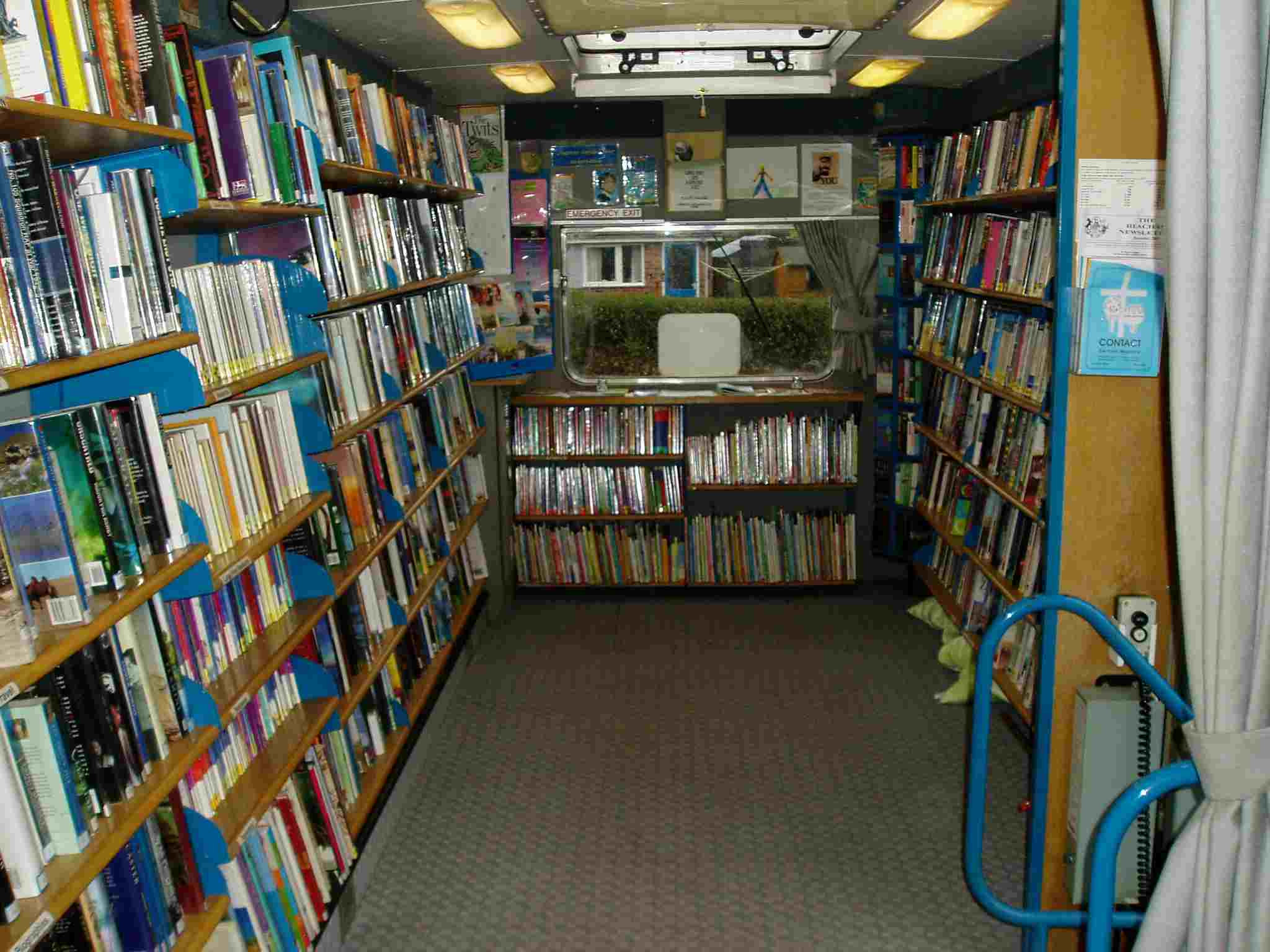
When you realised that there was an interest on the mobile library for one particular type of book, you’d want to change your stock over. Most of the turnover was just people checking books out and so books moved from village to village eventually. But we did have this other stock that we could bring on to replenish different sections. So with things like large print books, which you couldn’t hold a huge number of, you did try to find out what people who were reading large print wanted and then look for those books. We always carried a list of the large print book stock so that they could choose what they wanted because they had two shelves of probably 40 – 50 books to choose from, which wasn’t much. Those large print books were the bane of my life, because I had one mobile library driver who was a fireman and he drove the mobile library sometimes as if it was a fire engine. Every time he would brake, the large print books would de-shelf and I had to go and put them all back on the shelf again.
Travelling around Norfolk
I can’t remember a single time when the mobile library wasn’t able to get out and about because of the weather. We always tended to get out, and we were going out on the marshes, but the roads were relatively clear. I remember the main issue was having to back up a large mobile library on the lanes. Some of them were very narrow for this vehicle. I don’t know how they did it to be honest, it was an absolute horror.
Facilities on the library vans
The facilities were grim and I’m quite hardy. Getting to a loo was quite tricky, normally at lunchtime we’d try and find somewhere where there was a loo, or, dare I say, we had to go and find somewhere to go for a wild wee! There were a few people who would allow you to go into their houses but you had to know who it was before you would go in. There were sort of long-standing relationships that had been built up over the years and people would allow you to go in.
Winter was pretty horrendous, there was a Calor gas stove in the van which really stank, and I just had that feeling of a damp environment. It was not great, but I think we were a bit tougher then. You just got on with it until you got back to base. However there were some benefits. Once a fortnight, we had a two-hour lunch break at Winterton which meant we could walk on the beach or sunbathe or whatever. I don’t know how that had been arranged, but that was definitely one of the benefits of the job.
Also, we had a lot of very kind people who would offer tea. Sometimes that was brought on a tray to the bus and sometimes we had to go into their house, which was interesting, to say the least. I don’t know how those offers were engineered.
Banter
I worked full-time on the mobile library, and it was a very fun job. We had a lot of laughs. Norfolk ‘old boys’ loved to banter, and I learnt that they would come on the mobile library to banter. I was brought up in Birmingham and there is a banter in Birmingham which worked just as well in Norfolk, so we were able to hit it off with each other.
Upkeep of the vehicle
I’m very thankful that I wasn’t responsible for the vehicle. I was responsible for making sure people got up and down the steps properly, but the driver was responsible for all the checks on the vehicle, which they did religiously every morning. The drivers went round and checked everything and cleaned the van once a week. We often had to start the week by going to the petrol station which had to be, in our case, a very tall petrol station.
Accessibility
Customers had to come up three steps, I think, to get onto the van. There was no accessibility for anyone less mobile but in my time, nobody fell. A few tripped up the steps but no one fell down the steps. It was a very narrow doorway so they could get on and off as they had something to hold on to, I suppose. But sadly there was nothing, no ramp that would come down or a dropped step for them to come up. How things have changed.
A ‘social’ service
It was quite a relaxed time really. There were one or two places that were quite pressurised but most of the work was actually very relaxed. You ended up counselling the people about what books they wanted and how bad the weather was and how bad their health was. You were sort of, how can I put it? It was more of a social, as much a social thing as about the books. The books were important to people, but I think they came to the mobile to have a chat. To find out what was happening in the next village and so we provided quite an important link between the areas with few people. 45 years ago people didn’t travel in the same way as nowadays, especially not if you lived out on the marshes or you were a tied worker on a farm. There were a lot of stops like that that we did.
Leaving the service
When I was pregnant and due to give birth in the December, I found working the days at Acle, which were incredibly busy, just too much. So I asked if they would allow me to work in the library for those two days and for someone else to go out on the mobile, but they refused. So I had to eventually get a doctor’s note and leave permanently for the last month of my pregnancy, which was rather sad, I felt a bit sour and undervalued as a result. It was not a pleasant end.
However, after I’d had my child, I decided I wanted to come back to work. I sent a letter off, which landed on the schools’ library desk, and they were looking for someone to join the school library unit part-time. So I joined them and went out again on mobile libraries to schools. In the office, we were putting together project collections for schools, lots of packing up boxes and sending them off. And then schools would sometimes ask, if they didn’t have a very large library, for the mobile to visit. The children would come onto the bus, and we would sit on the floor with them and choose books together and read stories and had a great time. We would deliver project collections to the schools as well. So that was really good. I had a female mobile library driver, and we got on really well. It was only a few months, but it was really good fun.
Going forward
I think there’s still a need for a mobile library service. There are areas which have no bus services, so if you can’t drive, you are stuck. I also think we need to consider people who are housebound. They need to have something to keep their brains going. I think combining those services and going to places where there isn’t transport, is still very important. There are still some very isolated places in Norfolk.
Joyce Burtenshaw (b 1953) talking to WISEArchive in Hethersett on 13th February 2026.
@2026 WISEArchive. All Rights Reserved.